Pain With No Injury - Causes and Cures
Insidious pain is the kind of pain that develops slowly and seems to come out of nowhere.
The Oxford Languages dictionary defines insidious as “proceeding in a gradual, subtle way, but with harmful effects.”
People often say:
“I have no idea why my hip hurts.”
“I didn’t injure myself.”
“Nothing happened.”
There was no fall, no accident, no surgery, and no obvious trauma. Yet you feel pain that is not getting better and may continue to worsen over time.
Surprisingly, insidious musculoskeletal pain can be a good type of pain to have.
Why?
Because when pain develops gradually, there is a high likelihood that it can be reversed.
Insidious musculoskeletal pain is commonly caused by:
Poor posture
Repetitive movements
Static positions held too long
Everyday habits you barely notice
Examples include:
Crossing the same leg every time you sit
Carrying a child, backpack or purse always on the same side
Shifting to one side or locking your knees while standing
Using your phone in the same awkward position daily
Over time these habits create stress on your body by:
Poor alignment that can shorten some muscles while lengthening and weakening others.
Placing the spine and joints out of proper alignment that can reduce blood flow and compress nerves.
Muscle guarding, stiffness, tingling, numbness, and muscle spasms.
Microscopic irritation
But these habits can often be corrected once identified.
My Personal Example: Left Wrist Pain
I experienced this myself.
At first, I noticed a mild soreness when turning my left hand. Over time, that soreness became a sharper pain whenever I used this wrist.
This was puzzling because I am right-handed.
I expected my right wrist to hurt since I use it much more frequently, but my left wrist was the problem.
I didn’t injure it. I hadn’t fallen. I hadn’t hit it on anything.
So what was causing the pain?
The Real Cause
I started paying closer attention to my daily habits, especially while working in my office.
Then I found the answer.
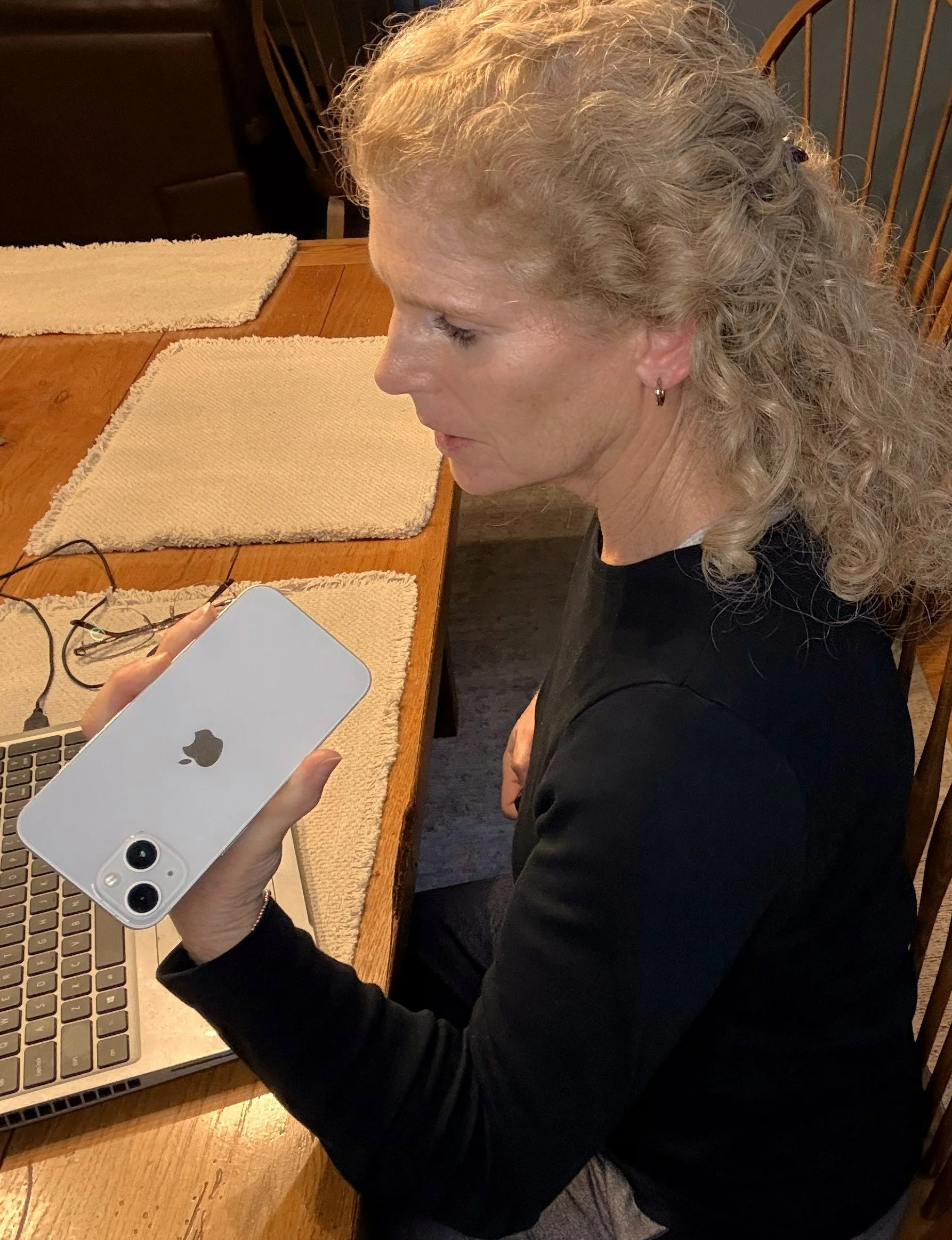
I had gotten into the habit of sitting at my desk while holding my phone in my left hand during calls. (See picture above)
While talking, I was unconsciously twisting my wrist toward the speaker while holding my phone for long periods.
I repeated this multiple times a day for weeks.
That small habit created ongoing strain on the muscles, tendons, and ligaments of my forearm and wrist.
Listen to Your Body
It communicates through:
Stiffness and Tightness
Aches and Pain
Numbness and Tingling
Muscle spasms and Fatigue
These are warning signs that something needs attention.
In my case, weeks of holding my wrist in a twisted static position caused:
Reduced circulation
Tightened tissues
Muscle shortening
Microscopic irritation
Eventually, my pain became impossible to ignore.
How I fixed it
Once I recognized the cause, I made simple changes:
Stopped holding my phone during calls
Returned to using a phone holder
Began stretching my wrist and forearm in the opposite direction
Reduce repetitive stain
The result?
My pain gradually disappeared within weeks, and it has not returned.
The Takeaway
Do not ignore your pain.
Too often, people cover up symptoms with medication while continuing the habits that caused the problem.
When caught early, many aches and pains can improve with simple corrections, without the need of braces, injections or surgery.
Your pain may be trying to teach you something,
Pay attention!
Learn More
If you are unsure of the cause of your pain or need more guidance on proper posture, alignment, mobility, or flexibility, review my assessment articles: